BOOKSHELVES ARE GRAVEYARDS OF SILENT LIVES – IF WE DON’T READ

SHORT SENTENCE by JESSICA BERENS
(www.grosvenorhousepublishing.co.uk) Feb. 2017
This is my latest read. Jessica spent three years as Writer in Residence at Dartmoor prison and from her account of her experience I think she could. more accurately, have called the book Life Sentence, as I believe she will never forget it. Forget is what we all do where prisons and crime and punishment are concerned. The courts pronounce a sentence; the face in the dock is led to the cells and the judges and magistrates and lawyers and police officers forget them and move on; they are someone else’s problem. “Next.”
There are 150 prisons in the UK housing 86,000 inmates and the number of prison officers to look after them has been dramatically reduced by government budgeting to less than 18,000 today. Like the NHS, it is a worsening situation but, unlike the NHS, it is not prioritised in the public conscience. Jessica Berens’ book is a brave attempt to combat this ignorance and complacency.
In case you are unaware of Dartmoor I will let one Lord Stonham describe it as he did in a debate in Parliament in the late fifties when there was a motion to rebuild the prison:
“No one who is aware of the conditions could possibly countenance building another prison in this spot. Last year, 96.7 inches of rain fell at Princetown; and in one day last month, on November 25, 3.9 inches fell. Only the fish in Brighton Aquarium are wetter than that! It is not merely the wettest place in Britain, but one of the wettest in the world. In winter, fog or cloud is Perpetual and with snow and rain and continued condensation the life of officers, their families and prisoners is a misery. Since the war the Prison Commissioners have built 120 Cornish unit houses for the staff; but, however well they are built, nothing will stand up to the climatic conditions there. Owing to condensation, the walls in the houses have to be wiped down every day. If they are left two or three days fungus starts to grow.” I think modern building standards would deal with the problem of fungus, but one can still get the picture; the climate is the same.
The prison has not been rebuilt since the middle of the nineteenth century and one doubts if the conditions within have changed much either. Jessica describes the conditions in a style that parodies the numbing, bureaucratic edicts of the civil service by which the inmates and their carers are governed and she almost contains the anger she obviously feels at the failures of government and society to find a better way to treat the miscreants and victims of our human condition.
But her anecdotes of the prisoners are enlightening, amusing and often desperately sad. She used her tenure well, with a professional ability to record her experience with insight and humour. But when the gates closed behind her for the last time she could not help but carry the army of helpless souls with her – and perhaps a little of the guilt we all should feel because we haven’t found a better way to treat offenders.
A Foreword to the book by journalist, Nick Davies is equally enlightening. He quotes research he did into crime statistics for a Guardian survey. From a sample of 50,000 people asked about their experiences as victims of crime, and Home Office statistics of crimes reported, investigated, detected and brought to the courts, they found that out of a typical 100 crimes the real figure for the number of offenders brought to justice was three. To someone who writes about crime what does that say about all those television films and books where coppers solve cases in a few days? I think we should be writing about criminals not losers.
One might wonder why Dartmoor was built in such an unhealthy place, where hundreds of early prisoners died of Typhus. It was built, ostensibly, to house French prisoners of the Napoleonic wars. But it was placed on Dartmoor at the suggestion of one Thomas Tyrwhitt, who was private secretary to the Prince Regent, and on Duchy of Cornwall land, next to a granite quarry which Sir Thomas just happened to own. What a good idea when labour was scarce to have an almost unpaid, constant source of labour for Sir Thomas’ quarry and to build the prison from his granite. He laid the foundation stone himself. Perhaps he should have been Darmoor’s first resident
(sadly, since publishing this review, Jessica died in 2019)
Dickens and Mr Whicher
Sept.2016
Charles Dickens is not noted for his detective stories, but I wonder if he was about to succumb to the genre when he died? I recently reread, after many years, his last and unfinished novel; The Mystery of Edwin Drood. It was, according to his contempories, only half finished when a stroke killed him. If that is true Drood would have been as prolific as Bleak House and The Pickwick Papers which allows Dickens scholars much scope in guessing how Edwin Drood would have continued. Many famous writers have played at that game and I hesitate to argue with them.
By chance, almost immediately after reading the book I picked up Kate Summerscale’s docu-biog, THE SUSPICIONS OF MR WHICHER (www.bloomsbury. com). TV buffs will recognise the title even if they have not read the book. Kate relates the story of a sensational child-murder in 1860 and the speculation, gossip and investigation that ensued because of it. Her book is diligently researched and brilliantly constructed and I unhesitatingly recommend it as a perfect holiday companion.
Apart from telling the events of the murder and the later investigation by the London detective of the title, Kate exposes the explosion at that time of the popular press and how they pursued the story with ruthless and often innacurate zeal. She also explores the development of the recently formed, first detective unit of the Metropolitan police – of which Mr Whicher was one.
What, you might ask, has Mr Whicher got to do with Edwin Drood? We know, from kate’s research that the child murder fascinated famous writers of that time as much as it did the public and Dickens was no exception. Like everyone else, he opined his opinion as to who committed the murder (incorrectly as it turned out) and some of his contemporaries were brazenly influenced by the event in their writing. As well as the murder there was almost equal interest in Mr Whicher and his London detectives. That is the connection with Dickens I cannot ignore.
There is a character in Edwin Drood called Dick Datchery. He appears late in what we have of the novel. One expert thinks he may be a woman in disguise – but even allowing for Dickens’ supreme imagination and expertise I cannot think how he would expunge. “this gentleman’s white head was unusually large and his shock of white hair was unusually thick and ample.” and “…sitting long over the supper of bread and cheese and salad and ale which Mrs Tope has left prepared for him,” and change Datchery back to “an unusually handsome lithe girl.. very dark and rich in colour.” There must be another purpose for Datchery and I believe he was to become a London detective like Mr Whicher.
The period was the start of the detective novel; Wilkie Collins and a little later, Conan Doyle were to make the genre hugely successful which continues to this day. Is it possible that Dickens would not want to compete with the upstarts? If I am right and Dick Datchery was to be a detective it would explain why Edwin Drood was only half completed when Dickens had already led us to believe that the wicked Jasper was a murderer and even how Edwin Drood was disposed of – or had he?
How would Dickens have written a detective novel? Today the crime novel has a fashion of forensic detail for the crime itself with little faith in the brain power of the investigating officers a la Sherlock Holmes. But I believe Dickens would have followed his usual technique of letting the characters develop the story. Characterisation was his tenet and I don’t think he would have treated a detective story any differently. My own preference is similar; I don’t think crime-fiction should deviate much from the purpose of any other type of writing; that is, to hold the readers attention. I know Amazon and agents cry, “genre, genre, genre” but, if the story is about human behaviour, be it crime or romance, if you are interested in the characters you will want to know what happens to them. That is story-telling.
My latest novel, Getting Tyson attempts to follow the Dickens line. For the publicists it is a crime-novel, for the reader it is a story about people. I have no way of knowing how the mass of uneducated, illiterate people spoke in Dickens’ time. Victorian English still had its roots in the classical teaching of previous centuries, which is reflected in Dickens’ dialogue, and I find even his attemps to represent the speech of the great unwashed a little uncomfortable. Perhaps he was constrained by the language he was allowed to print. Fortunately, I don’t have that problem and if you are kind enough to read Getting Tyson he will bend your ears just like the bloke putting up that scaffolding around the corner.
“An upmarket crime novel about downmarket people.”
“You write with grit, realism and great drama and the premises behind GETTING TYSON…are fascinating.”
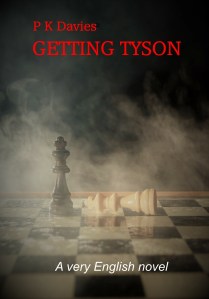
Detective Superintendent, Mike Prosser knows that London thug, Big Dave Tyson was responsible for his daughters’ horrific murder but he can’t prove it. Mike is functioning as a copper again and is on Tyson’s case but a brilliant, charismatic lawyer keeps Tyson out of jail – until fate takes a hand. Even then the contest is fraught with more killing and dramatic escapes. It takes a French prosecutor to make the difference; she finds that her body is more effective than the law.
To view or to buy, for e-book and paperback http://www.amazon.com/dp/B019M4TQIG


 Penpowerwriting.com
You must be logged in to post a comment.